
Running a Sex Offender Check in Pueblo County
Start with jurisdiction. The Colorado government registry gateway reaches the statewide public subset. Within Pueblo city, the official Police-to-Citizen list draws from Pueblo Police systems. Outside the city, the Pueblo County Sheriff's page directs the public to SOTAR. These sources overlap, but they are not identical. The state agreement expressly says its public list omits misdemeanor-only registrants and juveniles adjudicated for sex crimes. It tells users to ask local police, the sheriff, or CBI when they need fuller local information.
Gather a name, possible alias, city, ZIP code, and address before searching. Match more than one trait. Age, physical description, address, registering jurisdiction, and qualifying offense can help distinguish people with similar names. A map pin is only a lead because the state warns that map accuracy is not guaranteed. Pueblo County residents should verify a doubtful match with the office that maintains the registration rather than drawing a conclusion from a pin or shared name.
Three Pueblo County Registry Layers
Pueblo County has a city, county, and state split that matters in registry work. Pueblo Police publishes its own Police-to-Citizen search for city information. The Pueblo County Sheriff serves its jurisdiction through SOTAR. CBI supplies the statewide statutory public subset. A single result screen cannot be assumed to stand for all three custodians, particularly because CBI describes categories that do not appear on its public site.
The fastest local layer depends on place. Pueblo Police says its list updates from internal systems, so newly entered city data becomes available at once. The sheriff's Sexual Offenders page provides the route to the county SOTAR system. When an address sits near a city boundary, checking both local routes is prudent. Ask the registering office which jurisdiction owns the entry if the sources disagree.
The official Colorado registry agreement is shown in the image below, from the state's search agreement.
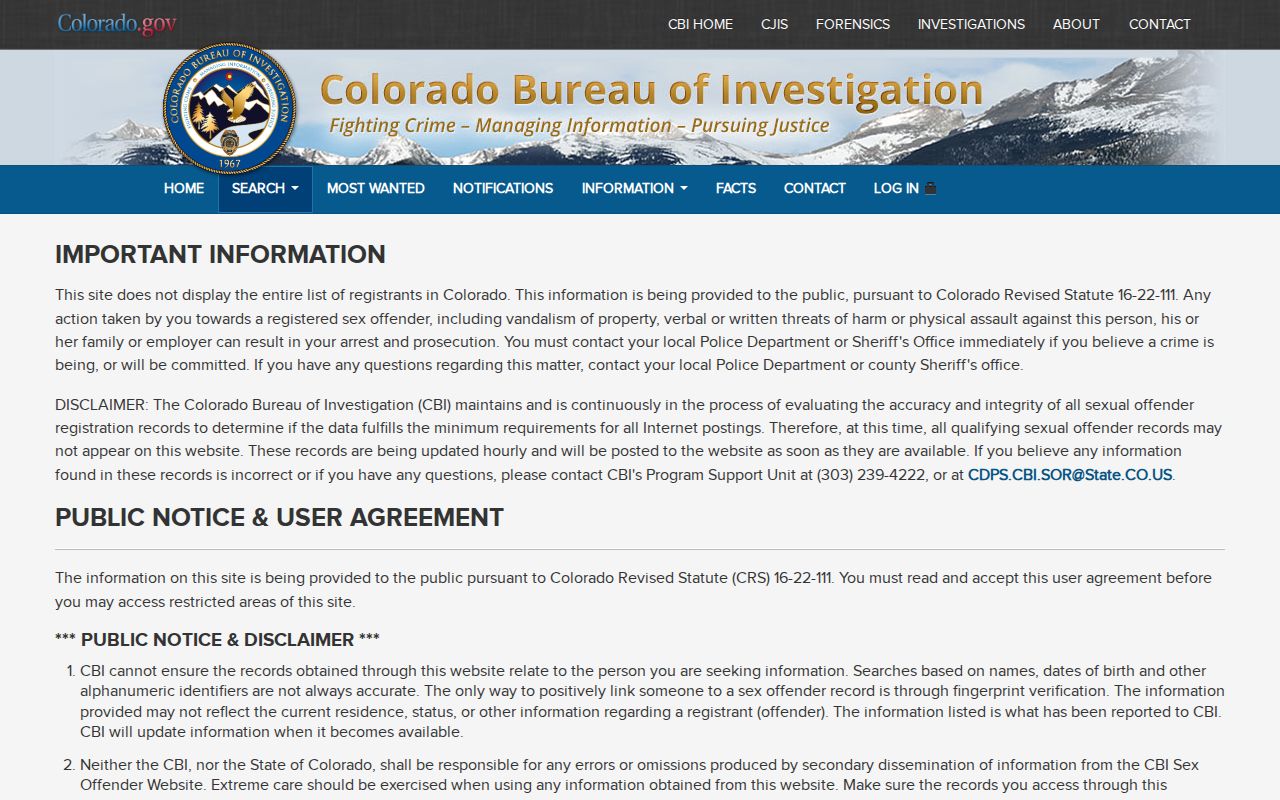
That agreement is a meaningful part of the search because it defines the public list's limits before any name or location query begins.
Searching the Colorado Convicted Sex Offender Search
The Colorado Bureau of Investigation and Department of Public Safety operate the Colorado Convicted Sex Offender Search. It is free and provides name and location paths for a statewide public subset. Use the county, city, ZIP, or address criteria to narrow a Pueblo County sex offender search, then compare the full profile rather than relying on the first result. The gateway view can be seen through the official Colorado convicted offender page.
- Open the official gateway, continue to the registry, and read the conditions of use.
- Choose a name search or a place search using address, city, county, or ZIP criteria.
- Review possible matches and compare age, physical traits, address, aliases, and jurisdiction.
- Open the profile, read the offense and status fields, then verify any concern with the registering agency.
| Field Label | Type | Required | Notes |
|---|---|---|---|
| Name | Text | No | Use known first and last name details. |
| Address | Text | No | Supports a location-based search. |
| City | Text or select | No | Use Pueblo for city-focused results. |
| County | Select | No | Choose Pueblo County for county filtering. |
| ZIP code | Text | No | Useful when city boundaries are unclear. |
Pueblo Police Registry Updates
The official Pueblo Police-to-Citizen registry is the focused city channel. Its rendered list shows full name, address, and age, with a profile link for more detail. Pueblo Police states that the data updates directly from internal systems. That makes it useful when city registration information has been entered more recently than another public layer reflects.
Do not treat the short list view as the whole profile. Open the detail page and compare identity fields before acting. The city system applies to Pueblo Police data, not every address across the county. For a person registered outside Pueblo city, move to the sheriff's SOTAR route. If a city entry seems missing, call Pueblo Police Records at 719-553-2554 rather than assuming no registration exists.
What a Registry Profile Shows
A public Pueblo County registry profile helps confirm identity and registration context. Common fields include a photograph, names and aliases, age or date of birth, physical traits, a registered address, the registering jurisdiction, status, and qualifying offense information. The Pueblo city list visibly provides name, street, city, ZIP, and age. Public fields should be read as a set. One similar name or address is not enough to establish identity.
| Name & Aliases | Primary name and other names used to help distinguish a possible match. |
|---|---|
| Photo & Physical Description | Photograph plus age or DOB, sex, race, height, weight, hair, eyes, scars, marks, or tattoos when published. |
| Registered Address | Street, city, and ZIP information associated with the public registration entry. |
| Offense & Statute | Qualifying offense, statute, and conviction or adjudication information. |
| Jurisdiction | The police, sheriff, or state authority tied to the registration. |
| Registration Status | Published status information that should be confirmed with the registering office if unclear. |
SOTAR Outside Pueblo City
The Pueblo County Sheriff's SOTAR link is the local route for sheriff-jurisdiction searches outside Pueblo city. That distinction reflects how law enforcement is organized across Pueblo County. City police maintains city registrations, while the sheriff handles its own jurisdiction. The SOTAR interface uses JavaScript name and location searching, so users should allow the page to load before deciding that no results exist.
The sheriff's registry route is shown below from the official Pueblo County sexual offender page.
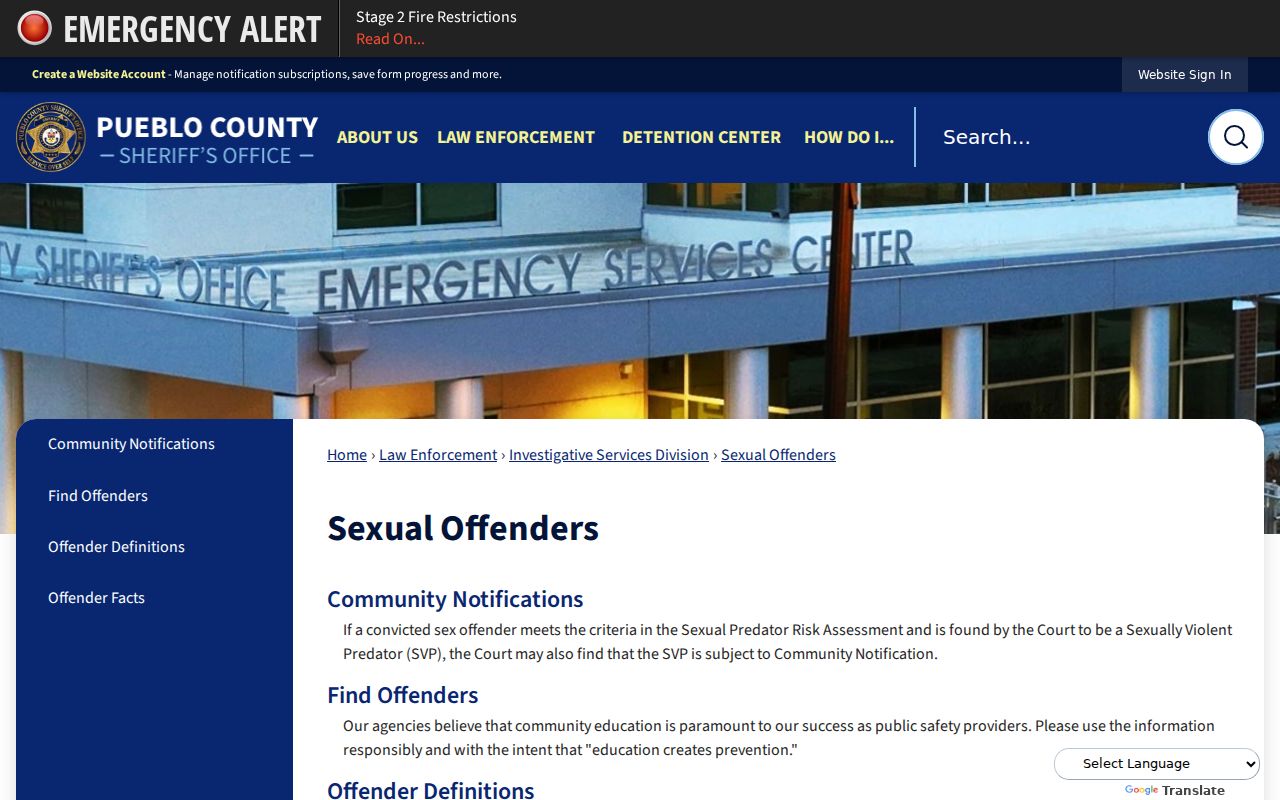
The sheriff page connects jurisdiction-specific guidance with the public search route, which helps prevent a city-only search from being mistaken for countywide coverage.
The linked Pueblo County SOTAR portal supplies the actual search layer.
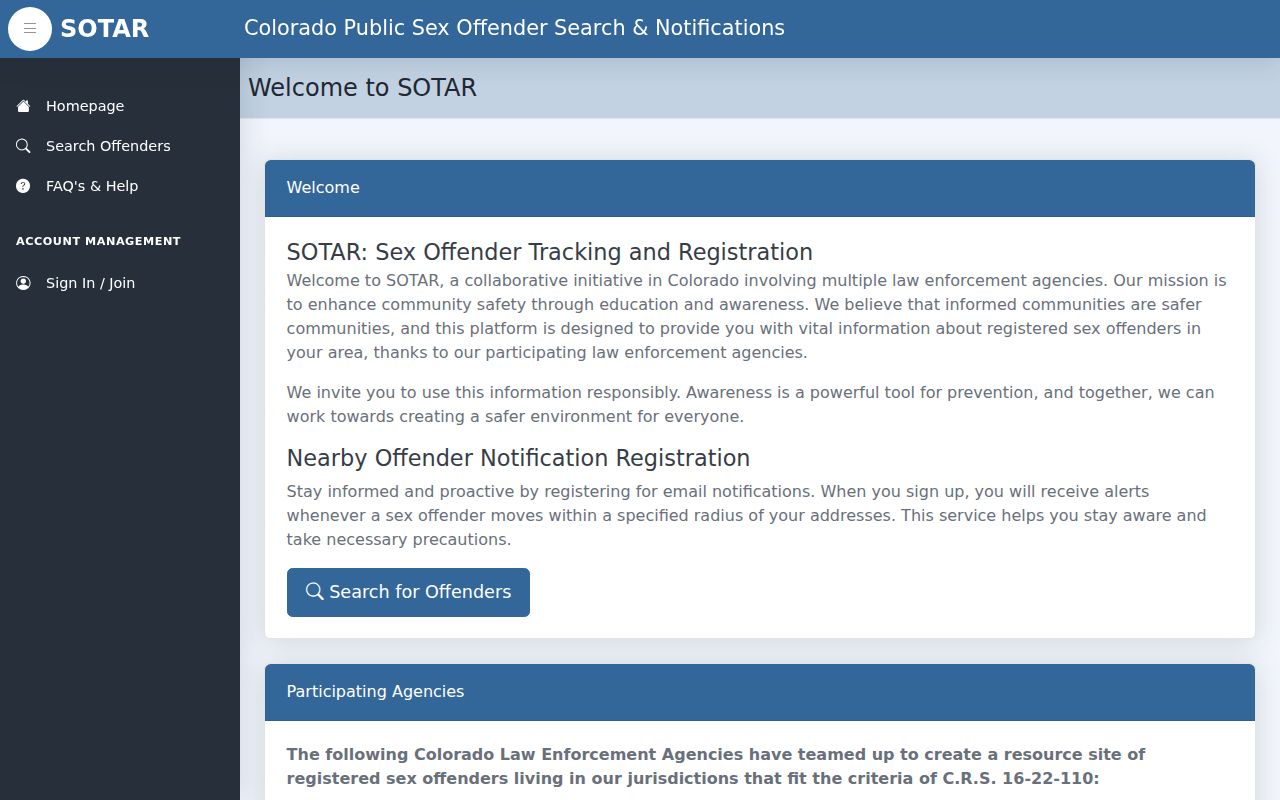
Use it alongside the Colorado registry when the relevant address lies beyond Pueblo Police jurisdiction.
Registration Requirements and Levels in Colorado
Colorado does not present public visibility as a simple federal Tier I, II, and III table. The relevant distinctions include whether a person falls within the public statutory subset and whether a court designates the person a sexually violent predator after a risk assessment. An SVP designation triggers community notification. A deferred-judgment registrant still must register, but Pueblo County explains that such a person cannot be found to be an SVP or subjected to SVP notification.
| Colorado category | Public visibility | Notification effect |
|---|---|---|
| State public subset | Appears when Colorado law permits public posting. | Standard registry access applies. |
| Misdemeanor-only registrant | Omitted from the statewide public site under the CBI agreement. | Ask the appropriate local or state office for lawful information. |
| Juvenile adjudication | Not posted on the public statewide search. | CBI may provide limited named information on written request. |
| Sexually violent predator | Public registry information may appear. | Court designation triggers community notification. |
NSOPW Beyond Pueblo County
The U.S. Department of Justice's National Sex Offender Public Website provides the cross-state layer. Its controls include first name, last name, county, city or town, as many as five ZIP codes, and jurisdiction selection. It searches participating public registries, which is useful when a person recently moved or when the relevant location may be outside Colorado.
NSOPW does not erase each jurisdiction's rules or publication limits. It gathers participating public sources. A missing national result does not prove that no duty exists, and a hit still needs identity checks through the source jurisdiction. The official NSOPW search is shown below.
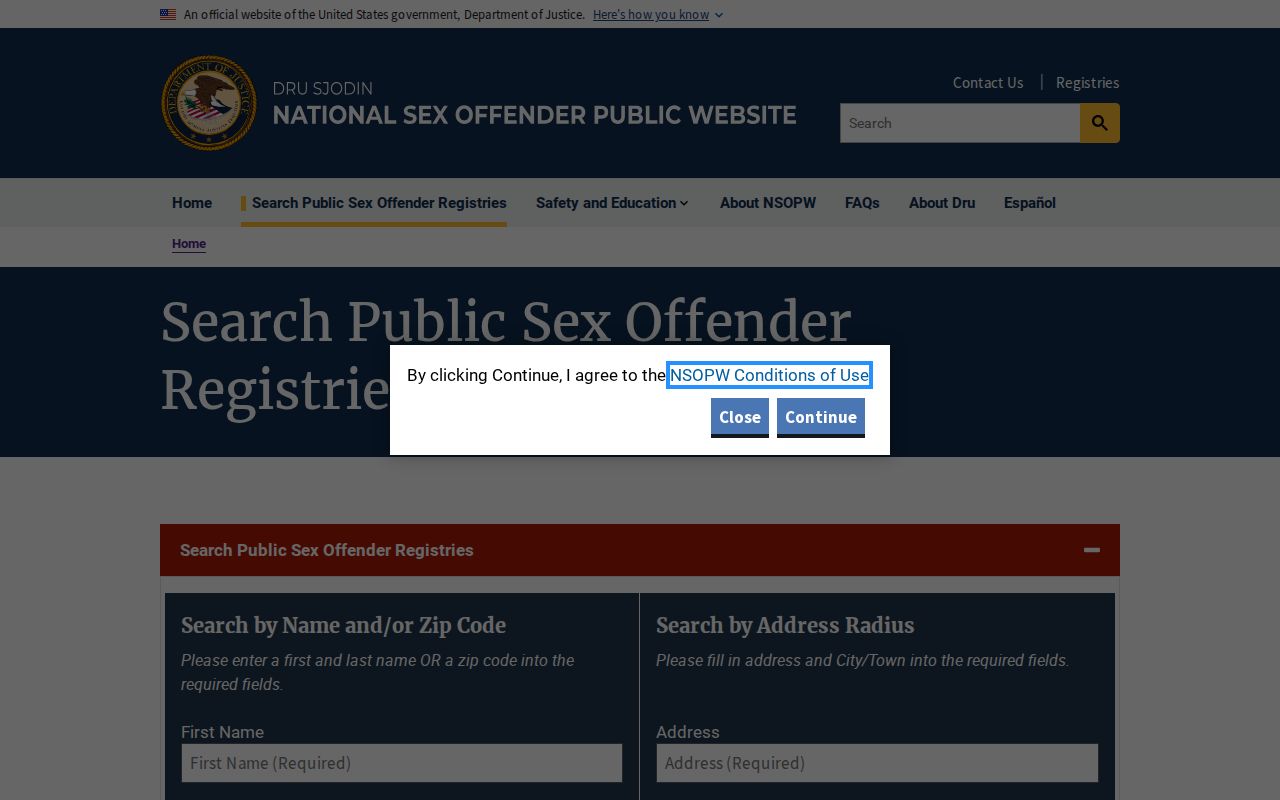
The national tool works best as a second layer after Pueblo County and Colorado sources, not as a substitute for them.
When Pueblo Map Data Looks Wrong
A misplaced pin, an old address, or an apparent mismatch calls for verification, not confrontation. First compare the profile's name, alias, age, physical traits, jurisdiction, and offense data. Next check the appropriate local system. Use Pueblo Police for a city address and the Pueblo County Sheriff for an address in sheriff jurisdiction. Then contact the registering office and describe the exact issue.
Pueblo Police registration services are based at 200 S. Main Street and can be reached through Police Records at 719-553-2554. The sheriff's posted registration contact is 719-583-6125. Records material still points to 909 Court Street, so call before a visit because county jail operations moved in July 2026. Report suspected noncompliance to police or the sheriff. Do not try to investigate at a home.
The state convicted offender gateway provides another view of the official route.
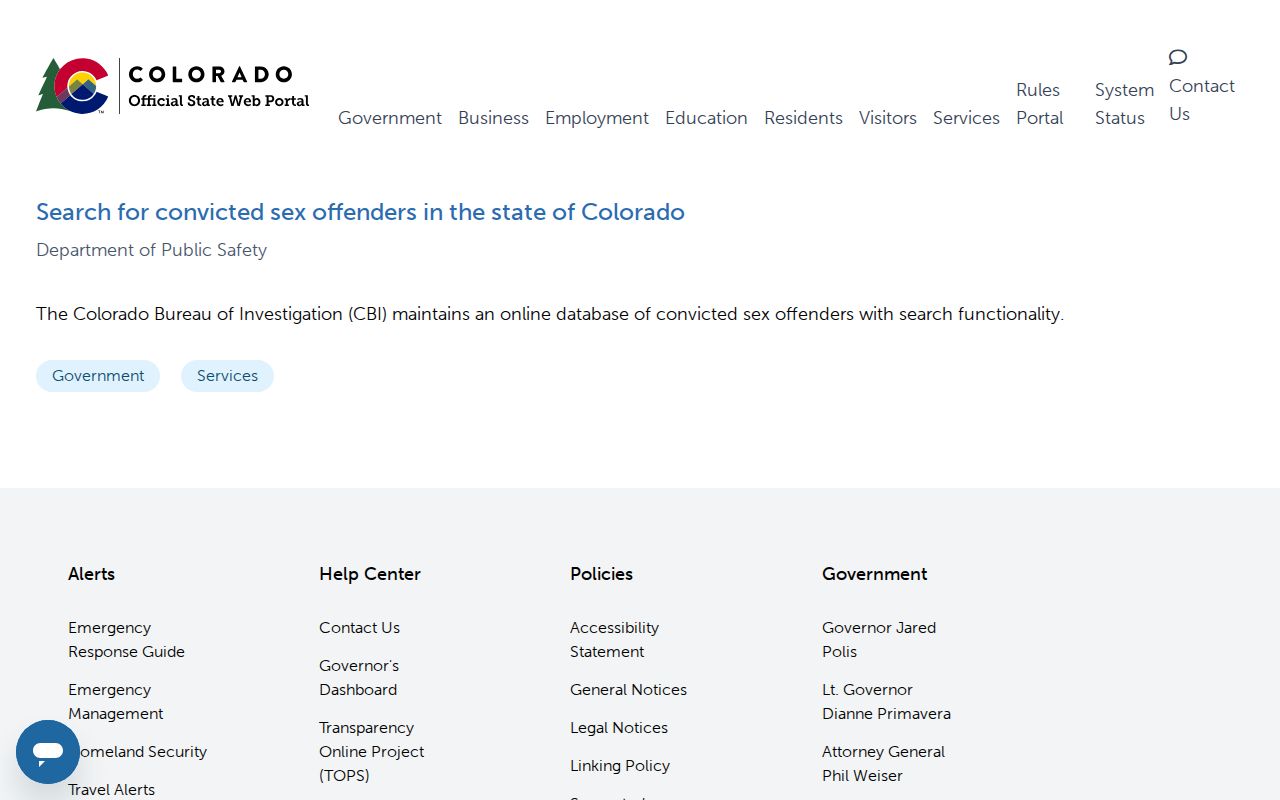
Its role is to lead users into the Colorado public search while preserving the state's warnings about scope and accuracy.
Lawful Use and Community Notification
Registry information supports personal, family, and community safety. It can help residents learn which agency maintains an entry, understand a public notification, and make a sound plan without spreading unverified claims. Colorado's system also recognizes that public visibility has legal limits. Victim information is withheld, juvenile information is restricted, and the statewide map is described as a best-effort aid rather than a guaranteed placement tool.
When a court designates an SVP, community notification follows the Colorado process. For ordinary questions about a Pueblo County entry, contact the local registering agency. Suspected noncompliance belongs with law enforcement. Never visit, message, threaten, publish private household details, or encourage others to confront a registrant or family member.
Use registry data lawfully: The Colorado registry agreement warns that harassment, intimidation, threats, endangerment, or retaliation are prohibited and may be prosecuted.